Last Updated: April 30, 2026 | Originally Published: December 29, 2016 | Reviewed by: Heizel Lago, K&C Fence Company — Tennessee State Licensed Fence Contractor, License #63780.
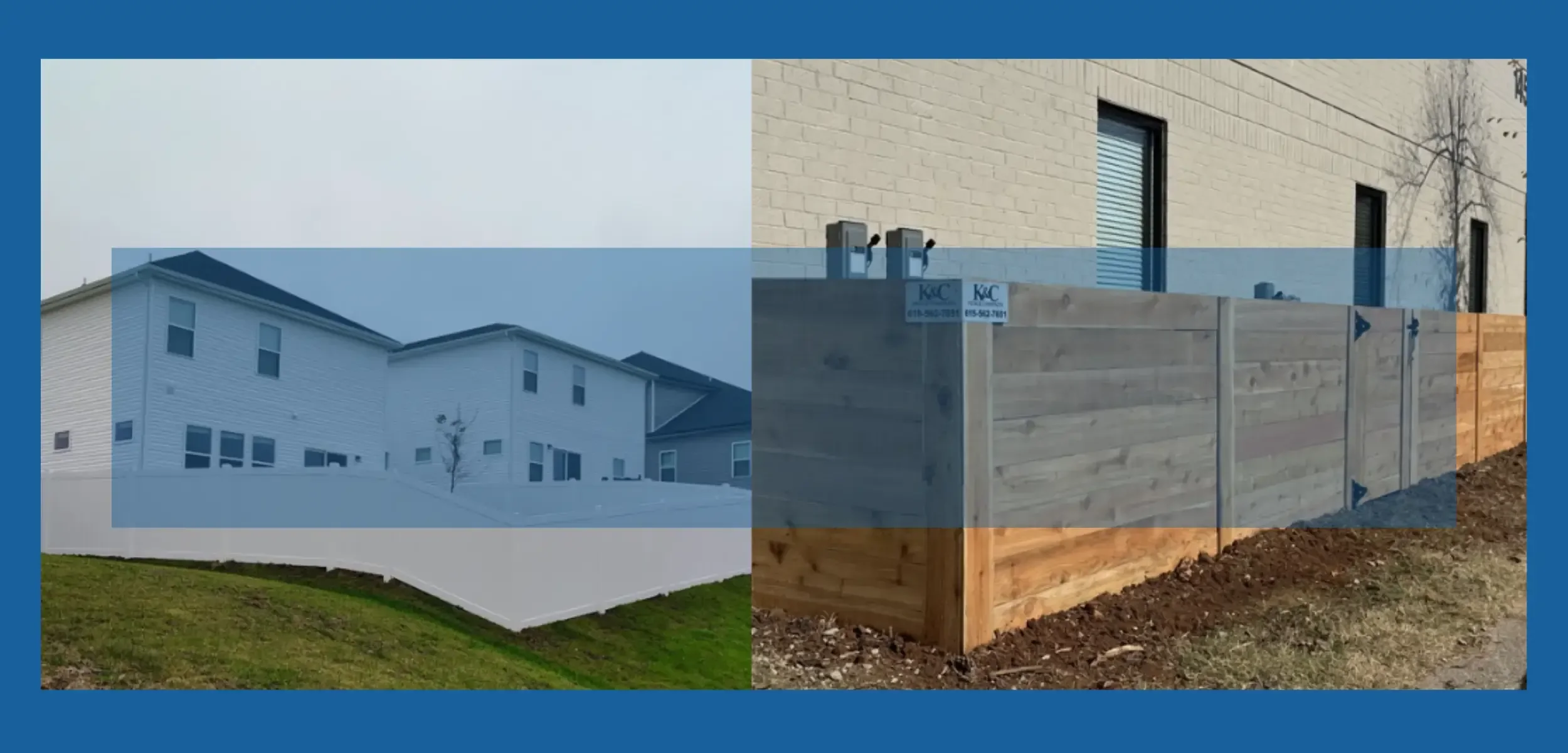
For homeowners who want low maintenance and a lifetime transferable warranty, PVC vinyl fencing is the stronger long-term investment. Wood fencing is the better choice for homeowners prioritizing style versatility or a lower upfront cost who are willing to commit to routine maintenance every 3–5 years.
A PVC fence, also called a vinyl fence or wood fence, is what we used to provide a privacy fence, a picket fence, or a farm fence for a residential or commercial industrial property.
Key Takeaways
Use these key takeaways to help you choose what fence type fits your budget or your needs.
- Wood fencing costs less upfront but requires staining every 2-3 years and periodic board and post replacement.
- PVC vinyl fencing carries a lifetime transferable manufacturer warranty and requires only occasional cleaning with bleach and water.
- Cedar resists warping better than pressure-treated pine, but is a softer wood that will rot without proper sealing.
- PVC vinyl is the lower-maintenance long-term choice; wood offers more style versatility at a lower initial cost.
- Cheap-grade PVC vinyl is available at retail wholesalers — always verify that contractor-grade material includes a bottom rail stiffener and gate post stiffeners.
Wood Fencing: Material Overview
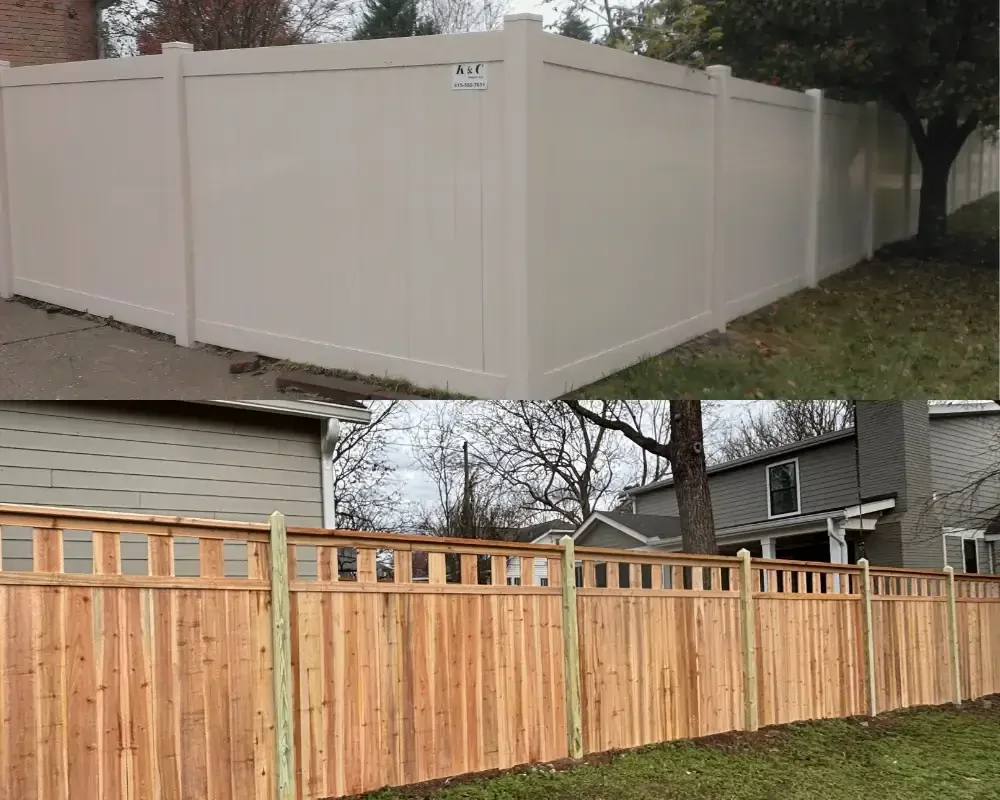
Wood fencing is a fence system constructed from natural timber — most commonly cedar or pressure-treated pine — used to create privacy screens, property boundaries, and decorative enclosures for residential and commercial properties. Because wood is an organic material, it is subject to moisture absorption, UV degradation, and temperature-driven expansion and contraction, all of which require active long-term maintenance.
Wood fence posts set in direct ground contact — the most common installation method — have an average lifespan of 7–15 years depending on wood species, soil moisture levels, and post treatment. Pressure-treated pine posts rated UC4B for ground contact offer the longest lifespan in Middle Tennessee soil conditions. Post replacement typically costs $150–$300 per post including labor.
In Nashville's climate — which combines humid summers with periodic freeze-thaw cycles — wood fences typically require professional cleaning, staining, and sealing every 3–5 years. Cedar fences sealed with a penetrating oil-based stain tend to fall in the 4–5 year range; unsealed pressure-treated pine fences often require attention every 2–3 years. Professional fence staining in Middle Tennessee costs approximately $1–$3 per linear foot, depending on fence height and surface condition.
Wood fence ownership requires ongoing maintenance across four primary task categories:
• Board replacement: Individual boards split, crack, or rot over time and must be replaced as needed.
• Gate adjustment: Wood gates shift seasonally as posts move; hardware realignment is typically required annually.
• Post replacement: Fence posts set in direct ground contact are susceptible to rot and may require replacement every 7–15 years.
• Staining and sealing: The entire fence surface should be cleaned, stained, and sealed every 3–5 years to prevent UV damage and moisture infiltration.
Wood fences are the most economical as far as price if you are looking for privacy and is a very much loved style for its versatility in style and character it brings to a property but will require maintenance and you should consider the cost or time it will take to maintain your fence in the future. There are different types of wood available including cedar and pressure treated pine and these 2 types of material weather differently. Pine does more moving and warping than cedar does but the western red cedar is a softer wood and will rot faster if it is not sealed.
PVC Vinyl Fencing: Material Overview
PVC (polyvinyl chloride) vinyl fencing is a synthetic fence system manufactured from rigid plastic compounds, designed to replicate the appearance of traditional wood fencing without the maintenance requirements associated with natural timber. PVC vinyl fence panels are available in privacy, picket, and post-and-rail configurations and typically carry a lifetime manufacturer's warranty that is transferable to subsequent property owners.
The manufacturer warranty on PVC vinyl fencing is typically fully transferable to subsequent owners, which increases the resale value and marketability of the property at the time of sale.
Some homeowners prefer the natural grain appearance of wood over the uniform surface of PVC vinyl. However, PVC vinyl fencing should be evaluated as the primary long-term option for property owners who cannot commit to the recurring maintenance costs and physical upkeep that a wood fence requires.
PVC vinyl fencing is the superior long-term choice under the following conditions: (
1) The homeowner prioritizes minimal annual maintenance.
(2) The property is located in a high-humidity or freeze-thaw climate that accelerates wood degradation.
(3) The homeowner values a transferable lifetime warranty as a property asset, or
(4) The budget cannot accommodate recurring staining and repair costs. Wood fencing remains the preferred choice when natural aesthetics, style customization, or lower upfront installation cost are the primary decision criteria.
Frequently Asked Questions
-
Yes — vinyl fencing typically costs 20–30% more to install than wood. Vinyl runs approximately $25–$40 per linear foot installed, while wood privacy fence averages $18–$28 per linear foot in most U.S. markets. However, vinyl's near-zero maintenance cost often makes it cheaper over a 10–20 year ownership period.
-
Vinyl fencing typically lasts 20–30 years with minimal maintenance. Wood fencing lasts 15–20 years with proper staining and sealing every 3–5 years. Without maintenance, a wood fence may deteriorate significantly in 7–10 years. PVC vinyl's synthetic composition makes it immune to rot, insect damage, and moisture absorption.
-
Vinyl fencing requires very little maintenance — primarily occasional cleaning with a garden hose and diluted bleach solution to remove mold, mildew, and dirt. Unlike wood, vinyl does not need staining, painting, or sealing. Gate hinges and hardware should be checked annually and lubricated to prevent rust or misalignment.
-
Myth: Vinyl fencing is fragile in freezing temperatures. Fact: Contractor-grade PVC vinyl is engineered to withstand freeze-thaw cycles without cracking. Low-grade retail vinyl with thin wall profiles is more susceptible to cold-weather brittleness. Always verify that fence panels meet a minimum wall thickness of 0.150 inches for cold-climate durability.
-
Vinyl fencing generally offers stronger resale value because its transferable lifetime warranty is a documentable property asset. Wood fencing may detract from resale value if it shows visible deterioration. A well-maintained cedar fence can positively impact curb appeal, but the ongoing maintenance liability is a factor buyers weigh during inspection.
-
Partially true upfront, but often false over time. Wood fencing costs less to install, but when you factor in staining every 3–5 years ($1–$3 per linear foot), board replacements, and post repairs, the 20-year total cost of wood often exceeds that of vinyl. Vinyl's higher upfront cost is offset by near-zero lifetime maintenance expenses.
-
Cedar is generally the better choice for privacy fence boards because it naturally resists moisture, insects, and warping better than pine. Pressure-treated pine moves and warps more but costs less. For fence posts, pressure-treated pine rated UC4B for ground contact is preferred because of its rot-resistance in direct soil contact applications.
-
Wood fencing looks more natural. Real cedar or pine displays authentic wood grain, color variation, and texture that vinyl cannot fully replicate. Modern vinyl fencing has improved significantly in appearance but still has a uniform, manufactured look that some homeowners find less appealing for residential landscaping settings that prioritize organic aesthetics.
K&C Fence Company installs PVC vinyl and wood privacy fences throughout Nashville, Brentwood, Franklin, Hendersonville, Murfreesboro, and surrounding Middle Tennessee communities.
To request a free on-site fence estimate, visit our site or call 615-562-7651.